Digital Newsletter
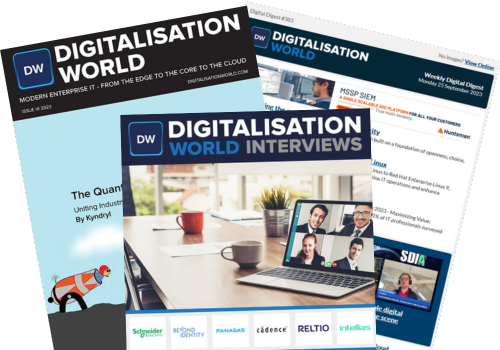
Each week our editor Phil Alsop rounds up the most popular articles, videos and expert opinions. We compile this into a Digital Newsletter and send it straight to your inbox every week.
Digital Magazines
We'll let you know each time a new edition of Digitalisation World is released so that you're always kept up-to-date with the latest and greatest news and press releases.
Video Magazines
The Digitalisation World Video magazine contains the latest Zoom interviews with experts in the industry.
New research from global technology and consultancy firm Tata Consultancy Services (TCS) and Microsoft reveals a clear majority (84%) of major firms have yet to set public science-based targets to reduce direct operational emissions from their supply chains, and that only 11% have disclosed science-based targets in reducing emissions in their supply chains.
TCS and Microsoft analysed public data from global companies with combined revenue of $10 trillion to produce the findings, as part of its white paper studying enterprise sustainability, Decarbonization: The Missing Link to Net Zero to evaluate how they are using their supply-chain data in the transition to net-zero emissions.
The research shows most companies are struggling to validate their data and accurately measure their decarbonization efforts, and highlights the importance of regular engagement with extended business ecosystems, including customers, suppliers, and other stakeholders, to improve supply chain transparency and reduce carbon footprints.
Swati Murthy, Director for Strategic Sustainability Collaborations at TCS commented: “Our findings make clear how much innovative work remains to be done to make global business sustainable – and how critically important it is to engage with an extended ecosystem that involves all stakeholders – including customers, consumers, suppliers, service providers and policymakers,” she says.
“Reimagining global supply chains, and using the latest technology and analysis, is a vital step towards more sustainable practices. Therefore, it is absolutely essential to forge stronger strategic collaborations with hyperscalers to share and scale solutions faster, bringing together the latest decarbonization technology and expertise and making it accessible to all stakeholders across the business value chain. This collaboration is key to unlocking the potential of green transitions and mitigating the environmental and social risks we all face.”
Other key insights within the research include ways in which businesses can make data more accessible, how companies can maximise edge-to-cloud, AI/Machine learning and digital twin technologies for decarbonisation, the sectors setting extended ecosystem targets with vendors and suppliers, and the role of regulatory pressure in Climate-Related Financial Disclosures (TCFD).
The white paper was authored by a team of sustainability experts, including Dr Swati Murthy Practice Head, Strategic Collaborations for Sustainability at TCS, and James Lockyer (Portfolio Management Director | Climate Innovation Fund | Environmental Sustainability Team) at Microsoft. By reimagining global supply chains, enterprises can better measure their true carbon footprints as a critical step towards the UN’s Science Based Targets Initiative (SBTi) for sustainable development.