Digital Newsletter
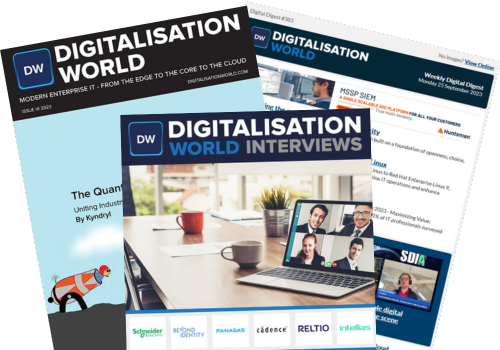
Each week our editor Phil Alsop rounds up the most popular articles, videos and expert opinions. We compile this into a Digital Newsletter and send it straight to your inbox every week.
Digital Magazines
We'll let you know each time a new edition of Digitalisation World is released so that you're always kept up-to-date with the latest and greatest news and press releases.
Video Magazines
The Digitalisation World Video magazine contains the latest Zoom interviews with experts in the industry.
The seven key factors are: data-driven decision making, flexibility & embracing change, entrepreneurial culture, a shared digital vision, critical thinking & questioning, learning culture and open communication & collaboration.
The new research questioned 850 HR Directors as well as 5,600 employees on the ways organisations can adapt for a competitive advantage in the digital age. The study showed that achieving business efficiency is critical to becoming an agile organisation that can keep pace with change, with 42% of businesses reporting an overall increase in organisational performance once business efficiency was achieved.
“Pace of change has never been more important for organisations than it is in the current climate,” says Wilhelm Frost, from the Department for Industrial Organization and Microeconomics at WHU - Otto Beisheim School of Management. “Adaptability and agility are extremely important for organisations if they want to get ahead of the competition and offer market-leading propositions. Being adaptable means better support for customers, and needs to happen to meet their needs, but it’s also a big factor in any company attracting and retaining employees with the skills to drive them forward. Companies unprepared for the relentless pace of change will simply not be able to compete for skills in today’s digital marketplace.”
The research showed a third of business leaders worldwide don’t think they are currently operating in a way to attract – or compete for – talent. This went up to over half of business leaders in markets such as India, Brazil and Chile. While, a quarter of employees worldwide said they were worried about losing their jobs to machines.
“The study highlights the opportunity for HR to step up and lead workforce transformation by allowing the productivity benefits of technology to be realised,” said Joachim Skura, Strategy Director HCM Applications, Oracle. “Too many organisations are implementing technology but not properly integrating it in to the business. Human workers still fear it’s them versus the machines when, in fact, organisational growth will come from the two working together. With any technology implementation, there needs to be both a culture change and upskilling of staff to work with machines and technology. It’s these digital skills that make up the seven factors needed to realise the true benefits of any technology and become an adaptable business.”