Digital Newsletter
Each week our editor Phil Alsop rounds up the most popular articles, videos and expert opinions. We compile this into a Digital Newsletter and send it straight to your inbox every week.
Digital Magazines
We'll let you know each time a new edition of Digitalisation World is released so that you're always kept up-to-date with the latest and greatest news and press releases.
Video Magazines
The Digitalisation World Video magazine contains the latest Zoom interviews with experts in the industry.
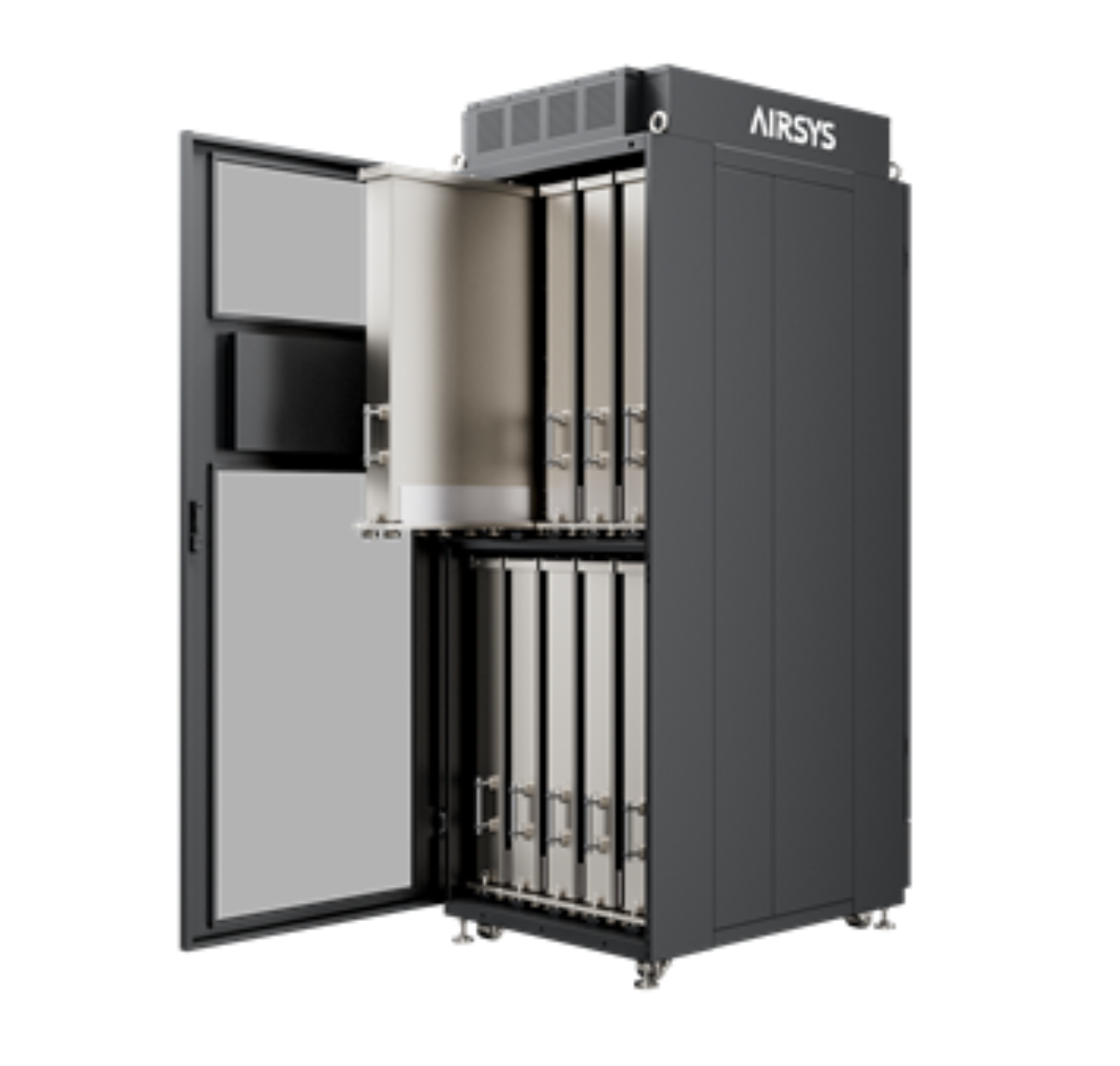
Airsys, a company focused on mission-critical cooling systems, has introduced its latest product: the UniCool-Max. It is designed for use in modular data centres, telecom facilities, and equipment rooms, with the aim of increasing air cooling density and improving system reliability through variable-speed technology.
The UniCool-Max builds on the UniCool platform, which is intended for compact thermal management. It adds features intended to support modular design flexibility and increase cooling capacity. Its core operating principle is matching cooling output to heat load requirements. Unlike fixed-compressor systems, which may experience frequent start-up cycles—reported at over 30,000 per year—the UniCool-Max uses variable-speed components to reduce rapid start-stop operation. This is intended to reduce mechanical stress on components and help maintain more stable operating conditions for equipment.
Key features and benefits
Each UniCool-Max unit provides up to 60 kW of cooling capacity. Combined systems can reach approximately 240 kW in standard configurations, and up to 960 kW in larger deployments. Capacity management is supported by a Synchronised Cooling Mode, which allows multiple units to operate at reduced load levels to improve efficiency and reduce wear.
The system includes Soft Start technology intended to reduce voltage spikes during startup, which may support infrastructure scaling without requiring oversized generators. It also includes integrated power monitoring and remote monitoring functions for operational oversight.
According to Airsys, the UniCool-Max is intended to address cooling requirements associated with higher-density computing environments, including those driven by AI workloads. The modular approach allows for scaling cooling capacity up to 960 kW without requiring onsite water in typical installations.
The UniCool platform development reflects Airsys’ focus on Power Compute Effectiveness (PCE). The system is designed to support data centres in managing cooling capacity alongside computational demand, including the ability to adjust unused cooling capacity within overall operational planning.