Digital Newsletter
Each week our editor Phil Alsop rounds up the most popular articles, videos and expert opinions. We compile this into a Digital Newsletter and send it straight to your inbox every week.
Digital Magazines
We'll let you know each time a new edition of Digitalisation World is released so that you're always kept up-to-date with the latest and greatest news and press releases.
Video Magazines
The Digitalisation World Video magazine contains the latest Zoom interviews with experts in the industry.
The backbone of global cloud and AI infrastructure is undergoing a profound transformation, led by the semiconductor industry. It's a market at a critical juncture, with explosive growth in AI and fundamental changes driving this transition.
In 2024, the total addressable market (TAM) for data centre semiconductors reached an impressive $209 billion, covering compute, memory, networking, and power domains. This figure is anticipated to nearly double by 2030, reaching close to $500 billion. AI and high-performance computing (HPC) are the key drivers, with generative AI substantially affecting demand for processors and accelerators.
GPUs remain central to AI infrastructure, with Nvidia commanding a staggering 93% of server GPU revenue by 2024. The Yole Group predicts that GPU revenue will soar from $100 billion in 2024 to $215 billion by 2030. Despite their sizeable average selling prices, GPUs are essential for AI training and increasingly used for inference.
In this rapidly evolving environment, AI application-specific integrated circuits (AISCs) are gaining traction. Tech giants like Google, Amazon, and Microsoft are heavily investing in domain-specific silicon to enhance performance and lessen reliance on Nvidia. As a result, AI AISC revenue is set to leap to $84.5 billion by 2030.
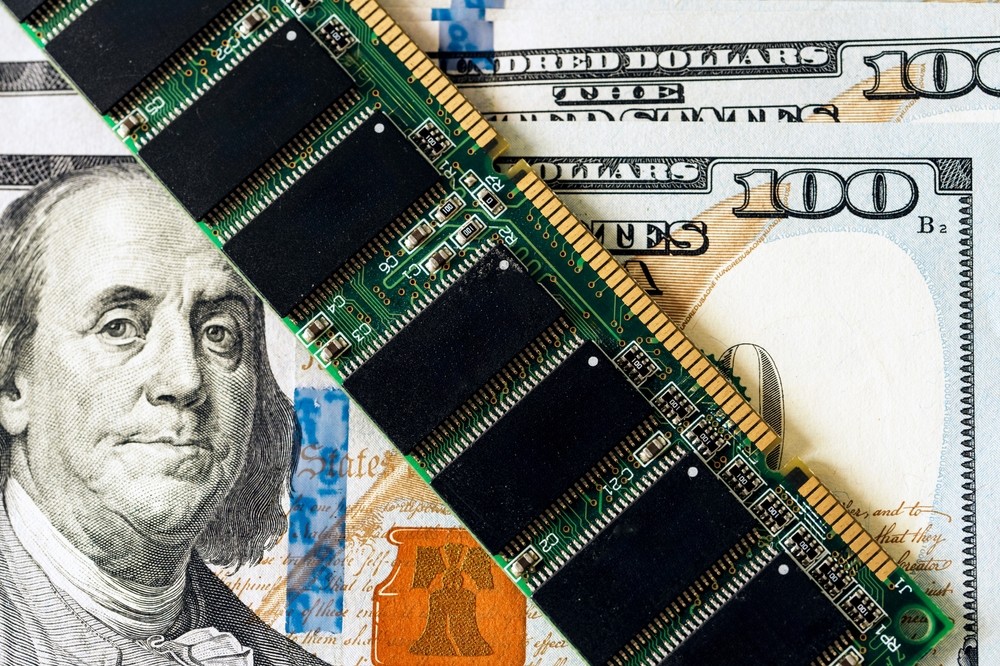
The evolution doesn't stop at compute. Memory architecture is also advancing rapidly. DDR5 adoption is ongoing, while high bandwidth memory (HBM) enjoys exceptional demand, especially for AI training. Computational express link (CXL) is becoming integral, addressing memory disaggregation and latency issues in emerging server architectures.
Data centre silicon leadership is witnessing shifts as well. American firms, notably Nvidia, AMD, and Intel, continue to dominate. However, China is scaling its domestic capabilities via strategic investments and policies, even as export controls impact supply chains, further reinforcing goals for sovereign development within and outside China.
The role of startups and market newcomers is not to be underestimated. Innovators like Groq, Cerebras, and Tenstorrent are reshaping the market, demonstrating how non-traditional solutions can rival established players in terms of cost, performance, and energy efficiency.
Eric Mounier PhD, Chief Analyst, Photonics at Yole Group said, "The data centre semiconductor industry is today investigating many approaches. At Yole Group, we investigated this domain in depth and analysed the innovations. Today’s solutions are all about control. AI workloads are reshaping what chips are built, how they’re packaged, and where they’re manufactured."