Digital Newsletter
Each week our editor Phil Alsop rounds up the most popular articles, videos and expert opinions. We compile this into a Digital Newsletter and send it straight to your inbox every week.
Digital Magazines
We'll let you know each time a new edition of Digitalisation World is released so that you're always kept up-to-date with the latest and greatest news and press releases.
Video Magazines
The Digitalisation World Video magazine contains the latest Zoom interviews with experts in the industry.
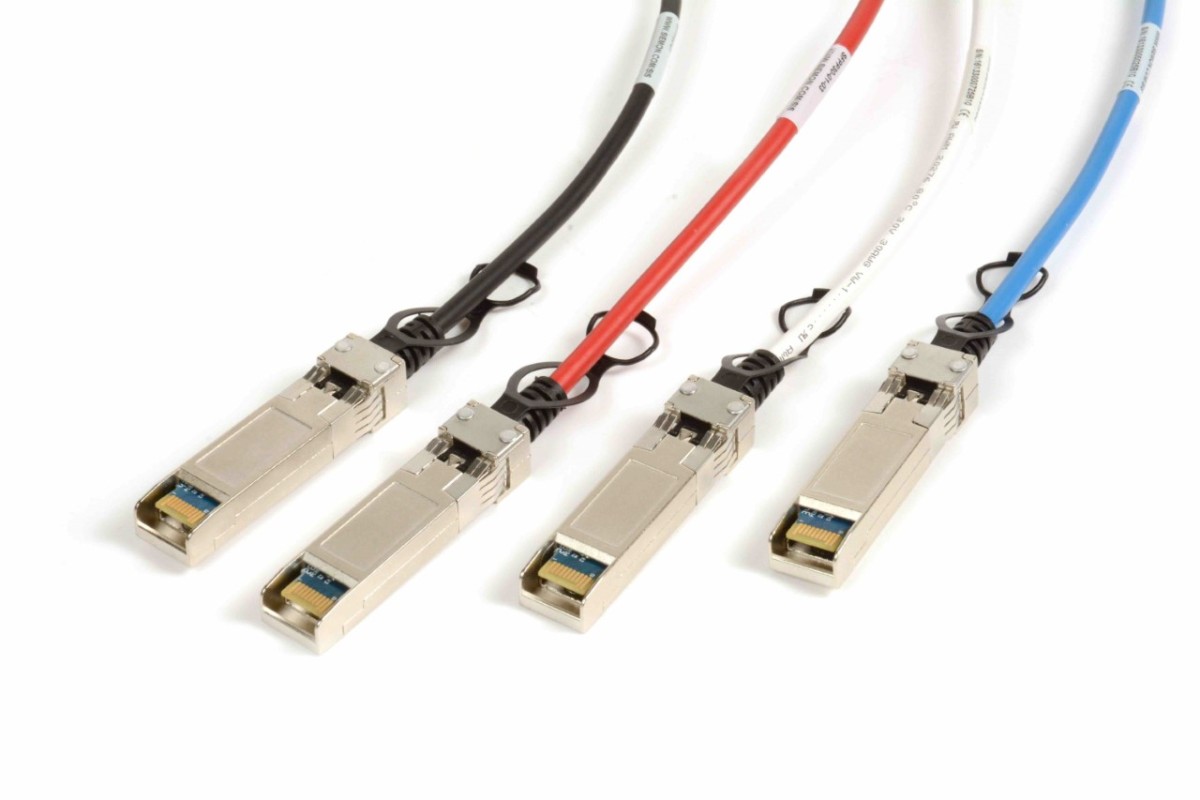
Siemon has published a new product and application guide that provides data centre designers and operators with valuable insight into the benefits that high-speed cable assemblies can deliver in support of higher-bandwidth, low-latency applications in the data centre.
Artificial Intelligence, machine learning, edge computing and other emerging technologies are widely adopted in enterprise businesses today. This drives the need for data centre server and storage systems to deliver speeds well beyond 10 Gb/s in support of these applications. Siemon’s new guide details how Direct Attached Cables (DACs) and Active Optical Cables (AOCs) can deliver performance, reliability, scalability and power efficiencies to cost-effectively adopt these emerging technologies.
A key focus in the guide is data centre topology and how fixed lengths DACs and AOCs can support shorter in cabinet connections or connect servers across multiple racks in End of Row (EoR) or Middle of Row (MoR) configurations.
In addition to providing a detailed overview of the cable options available to scale and support transmission speeds all the way to 400 Gb/s, the guide also addresses the rising challenge of latency. With latency impacting real-time technologies such as virtual reality, high frequency trading and blockchain, direct attach copper high-speed cable assemblies deliver distinct benefits over and above structured cabling for increased network performance.
Common concerns relating to equipment density and switch port utilisation can also be addressed through high-speed cable assemblies. The guide demonstrates how DACs and AOCs can be deployed to connect a single higher-speed switch port to multiple lower speed servers using 4x 10GbE, 4x 25GbE, 4x 100GbE or 2x 200GbE breakouts.
“Whilst there is no one single solution for connecting servers in data centres, high-speed cable assemblies offer a number of advantages and should be considered a valuable alternative to other cabling options”, says Ryan Harris, sales and market manager for high speed cable assemblies at Siemon. “We have created this guide to help data centre designers and operators make informed decisions when selecting cabling for their data centre server and storage systems, especially when future technologies must be supported that rely on high-speed, low latency cabling for optimum performance.”