Context: The core of Atlassian’s AI strategy
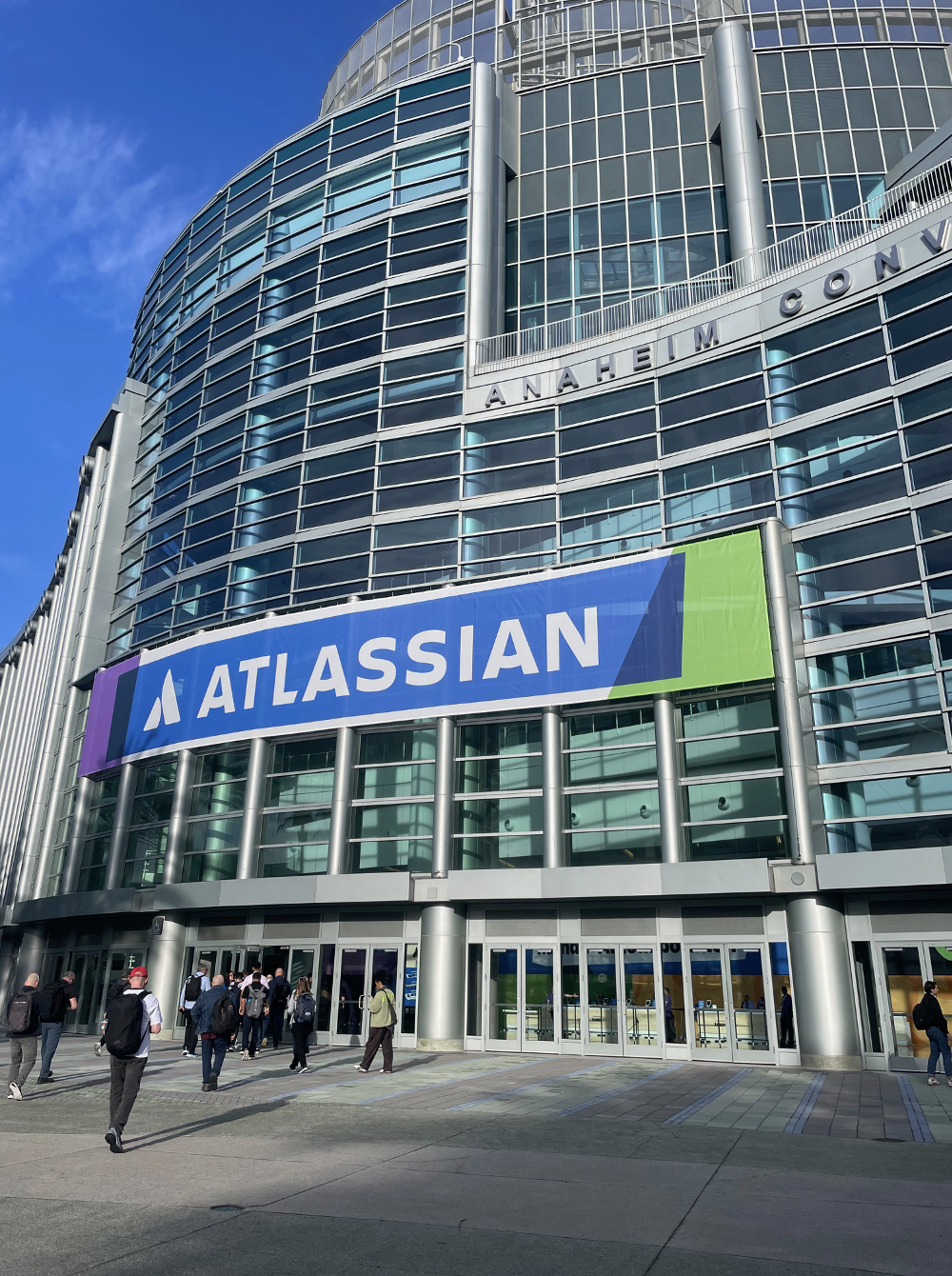
The conference unfolded over a tightly packed three-day agenda focused on the next evolution of work management, AI-driven collaboration, and developer productivity. Hosted by Atlassian, the event centred on a clear theme: moving from AI-assisted workflows to fully agentic systems that can plan, execute, and adapt work across interconnected tools and teams.
The event kept returning to one core idea: context. Not just data, but the web of relationships between teams, projects, decisions, and tools that gives work its meaning. For Atlassian, this is embodied in the Teamwork Graph, a shared layer that connects information across its platform and third-party systems. It’s this foundation that enables its AI, Rovo, to move beyond assistive prompts toward more agentic behaviour, where systems can make decisions and carry out multi-step tasks.
Opening Keynote: Framing the current state of AI
The opening keynote set the tone for the event, featuring insights from Ethan Mollick, Magnus Östberg, and Emily Chang. Together, they explored the current realities of AI. The discussion covered what’s working, what isn’t, and how organisations can build sustainable advantages when using AI. Key themes included rethinking human and AI collaboration, with the perspective that being “AI-native” does not necessarily mean fully delegating to AI. Instead, the emphasis was on deliberately deciding what should be augmented by AI and what should remain firmly in human judgment.
Additional topics included resistance to AI adoption within organisations and the idea of a “jagged frontier,” where progress is uneven, with some areas of capability advancing rapidly while others are progressing at a much slower pace. The importance of context engineering was highlighted as a key enabler of effective AI systems, alongside the need to balance innovation with brand identity as companies integrate new technologies without losing consistency or trust.
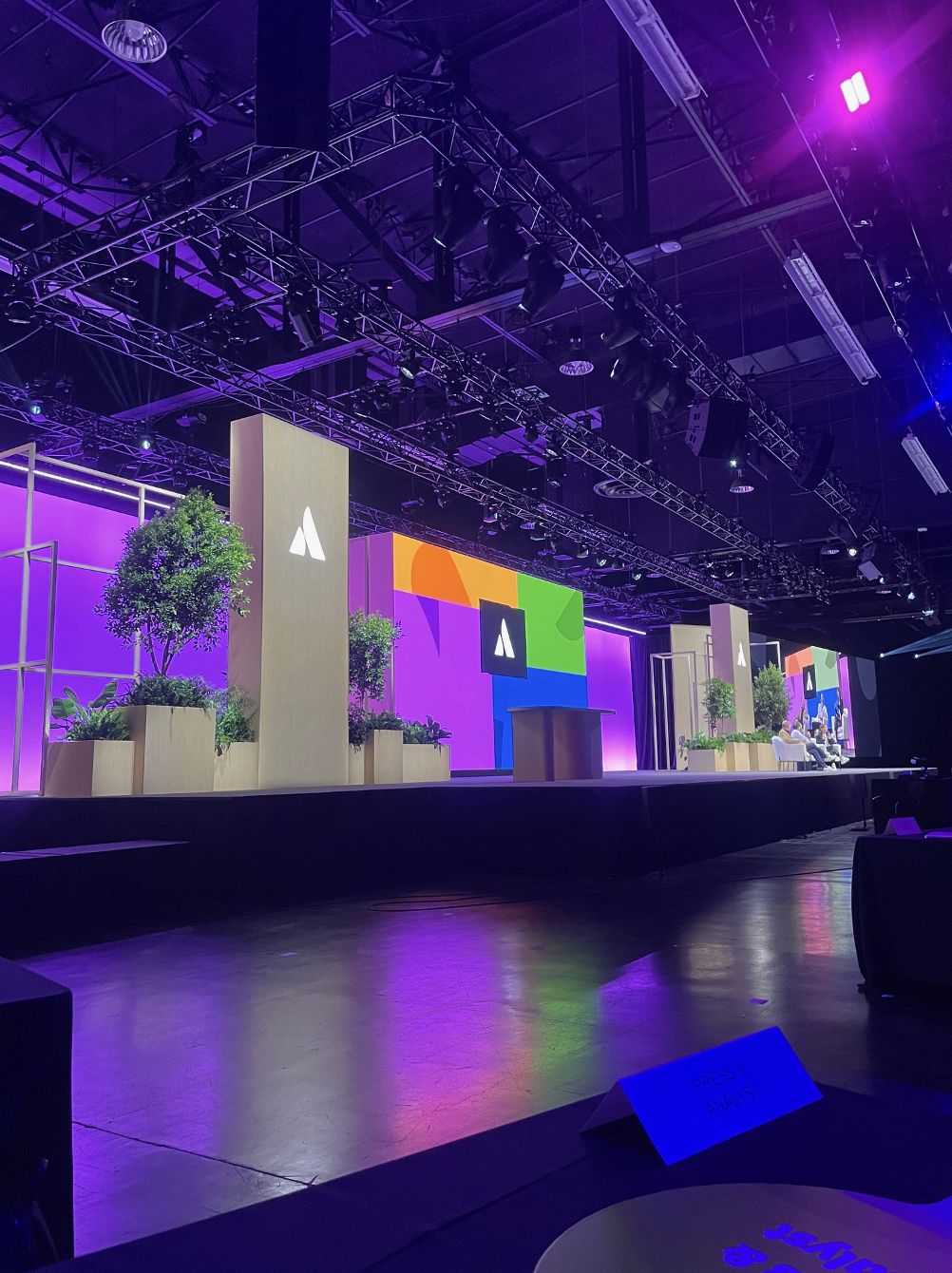
Founders’ Keynote and live demos: Closing the context gap
The Founders’ Keynote, led by Atlassian’s CEO Mike Cannon-Brookes, revealed enhancements across the company’s portfolio, emphasising how AI is being embedded into workflows and tools at scale. The session focused on Atlassian’s vision of the AI-native organisation and how work will evolve when humans and AI agents share a unified understanding of context. The central idea was that the future will be defined not by raw intelligence, which is increasingly a commodity, but by organisational context and how effectively it is used.
Cannon-Brookes described this as building a new anatomy for teamwork, powered by the Teamwork Graph, which he called “the connective tissue between your work, your people and your tools.”
A key message was the need to close the context gap so humans and agents can operate from the same understanding. In this model, humans remain critical for defining intent and resolving ambiguity, while AI agents increasingly handle execution at scale. As stated: “The future will be defined by the AI native organisations,” with institutional memory becoming a core source of advantage. Another key message was not to sanitise the chaos, but to build a “nervous system” capable of working within it.
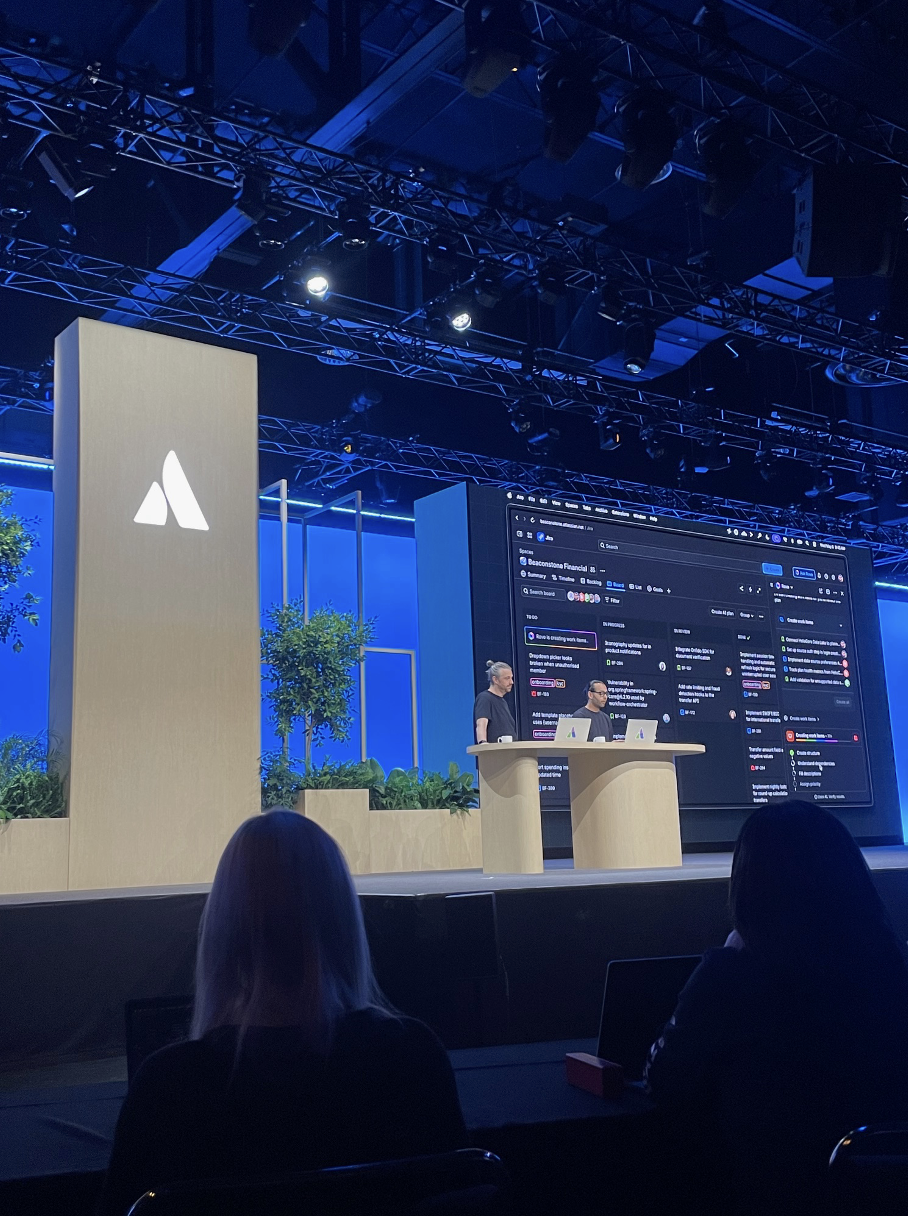
Live demos showed this in practice through human-AI collaboration. Tamar, Chief Product and AI Officer, demonstrated how implicit and explicit memory can be used to build richer AI understanding. Sherif, Head of Product AI, highlighted that organisational context includes not only business data but also code as a critical layer within the Teamwork Graph.
Across the demos, the focus was on how AI systems can synthesise context across tools, enabling more effective decision-making and execution grounded in shared organisational memory.
Closing Keynote: Humanity, trust, and creativity in the age of AI
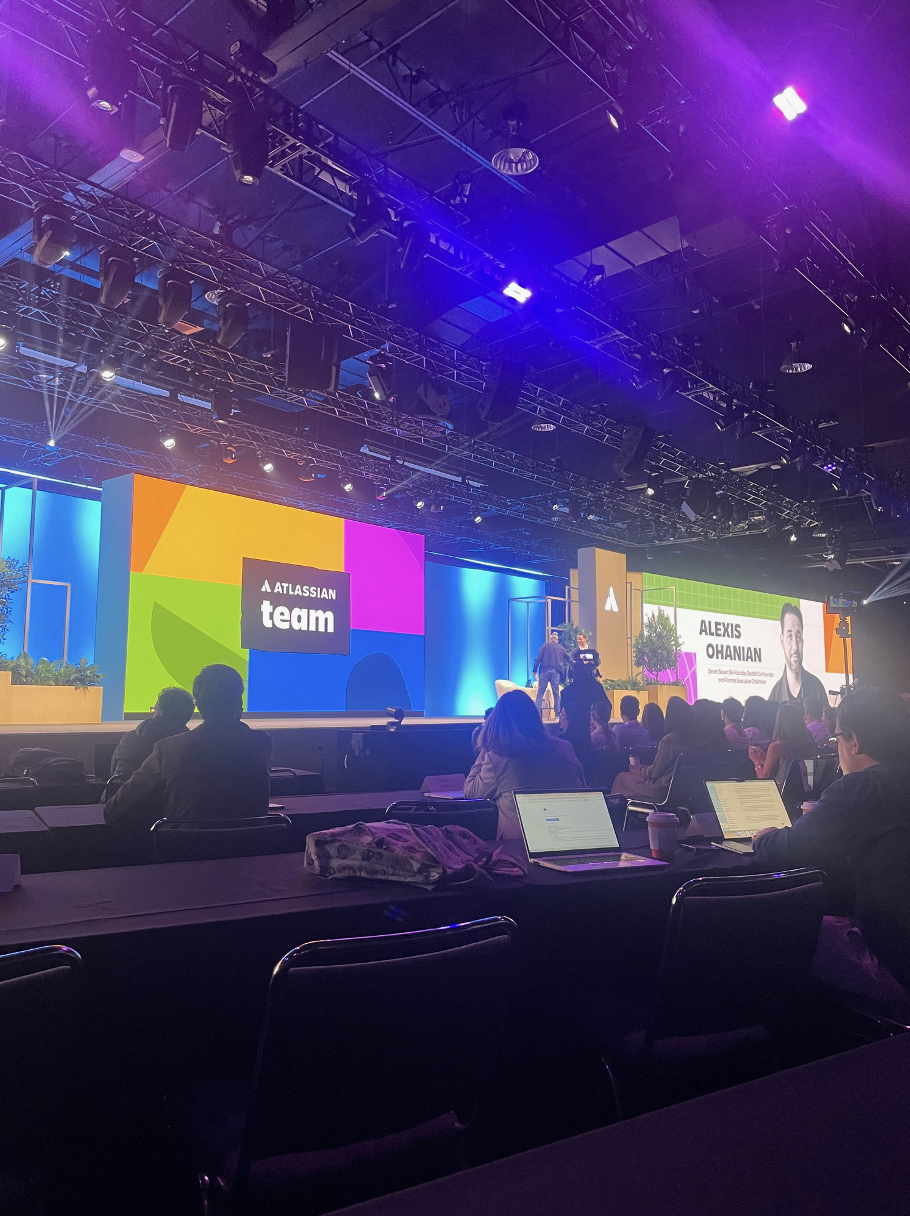
The closing keynote with Mike Cannon-Brookes and Alexis Ohanian focused on AI, online communities, and the growing importance of human authenticity in digital spaces.
Ohanian’s core message was that human presence and imperfection become more valuable as AI content scales. He noted that humanity comes through in real experience and that “there are places where human imperfection is actually the most important.” He also warned that “a part of our humanity actually dies a little unless we feed that part of the human process,” stressing the need to actively preserve human input in digital systems.
He argued that as AI-generated content improves, the value of real human creativity increases rather than decreases: “As AI generated content keeps getting better and better, I actually think the human side of it also gets even more valuable.” This was tied to a broader focus on trust, originality, and protecting human insight in an increasingly synthetic environment.
MSP Channel Insights interviews with Atlassian executives
As part of the event, MSP Channel Insights spoke with Brian Duffy, Chief Revenue Officer at Atlassian, in an exclusive interview exploring the company’s evolving enterprise strategy amid the rise of AI. The discussion covered Atlassian’s shift from product-led growth to a more structured enterprise, the growing importance of partners in scaling customer impact, and the move from simple cloud migration to true transformation-led change.
In a separate interview, Jamil Valliani, Head of Product for AI at Atlassian, focused on the importance of context in making AI useful at work. He explained that value comes not just from powerful models, but from connecting them to the right enterprise data and relationships through systems like the Teamwork Graph, enabling more relevant and efficient outputs, noting that “what we’ve found is that the other key ingredient in making AI truly useful in a business setting is context.”
He outlined how this approach shows up in products like Rovo Chat, Studio, and DIA, which move AI from simple assistance to more complex task execution and system-level workflow design. Across these tools, the goal is to make AI practical in day-to-day work rather than experimental.
AI, context, and what comes next
Across all three days, one idea kept resurfacing in different forms: AI only becomes truly useful when it understands context. Not just data, but how work actually happens, how decisions are made, and how teams are connected.
From the keynotes to the product demos and executive interviews, Atlassian’s direction was consistent. The focus is shifting from standalone AI features to systems that are deeply embedded in the fabric of work itself.
What emerges is a clear shift in thinking. AI is no longer positioned as something that simply assists individuals. It is moving toward something that understands organisations, supports decision-making at scale, and increasingly helps execute work end to end. In that world, context is not just a feature of AI systems, it will define how useful they ultimately become.